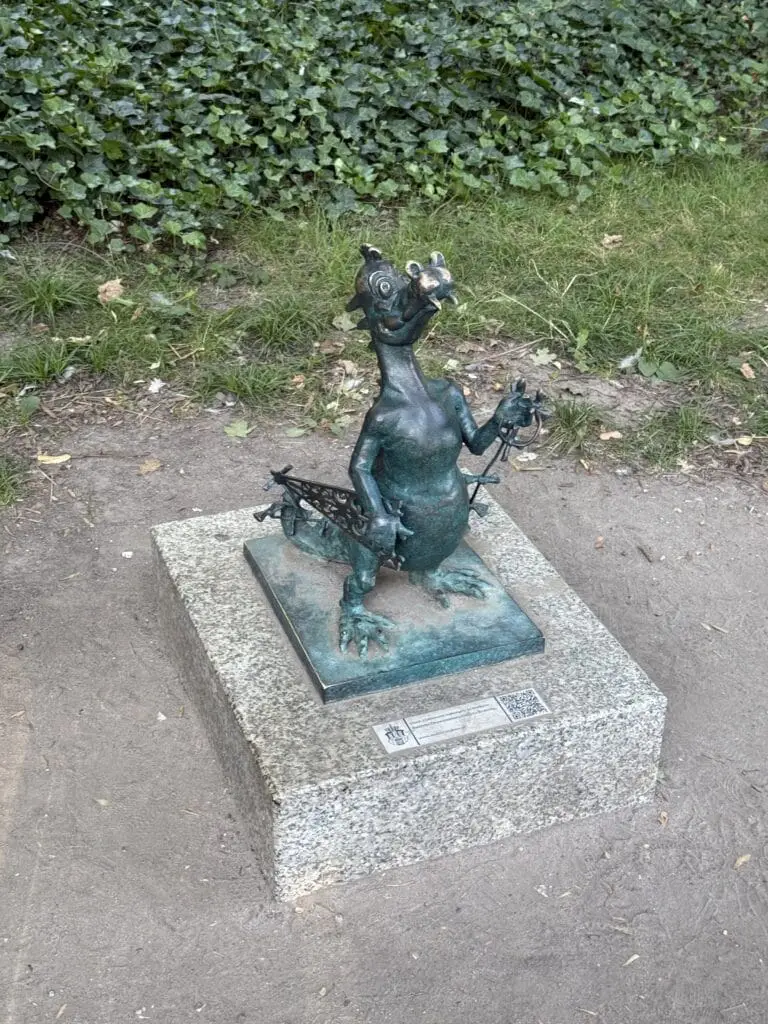
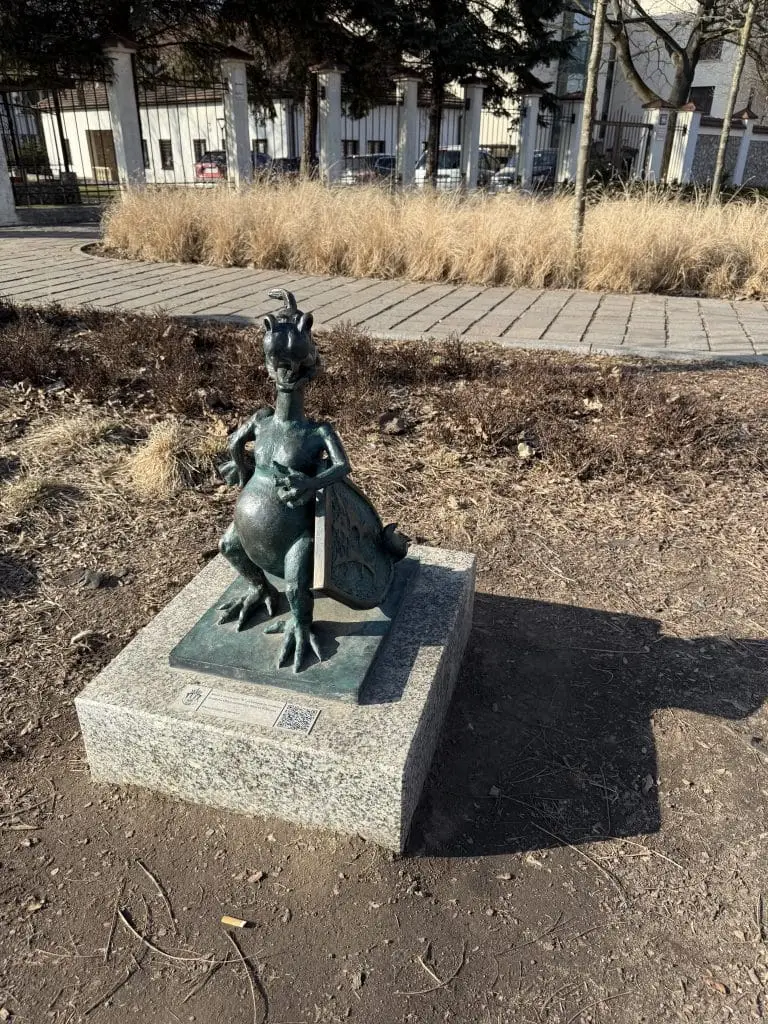
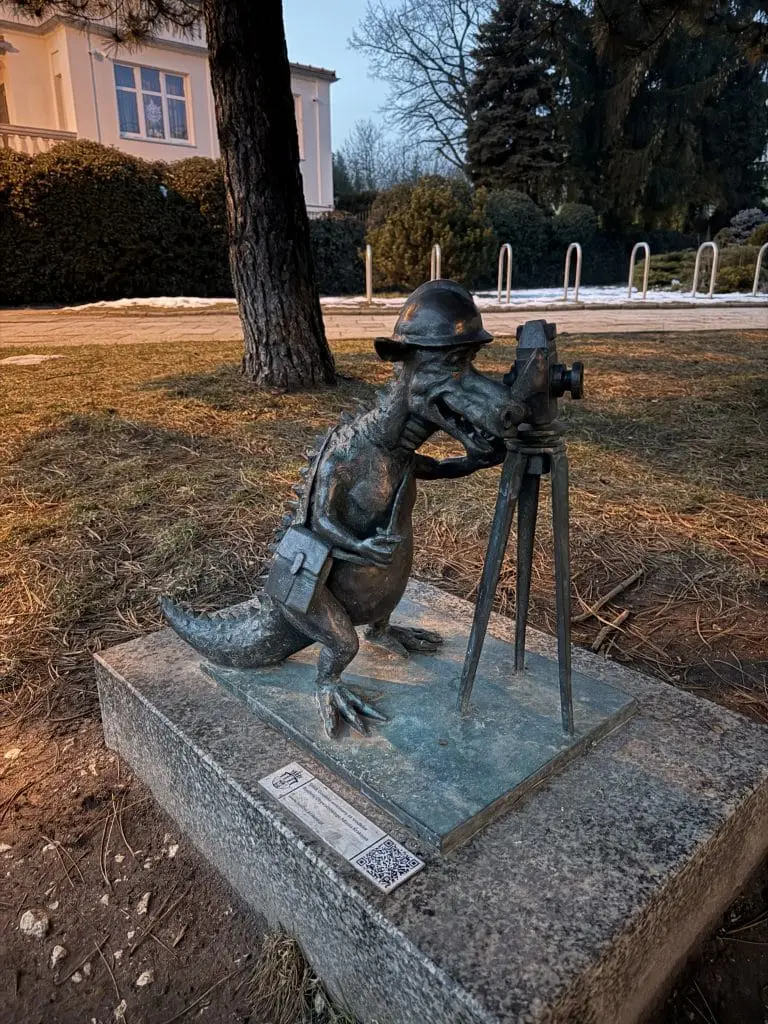
For centuries, Krakow has been associated with the legend of the Wawel Dragon. This tale is now present in almost every corner of the city - from coats of arms and gadgets to the most famous sculpture breathing fire at the foot of Wawel Castle. However, for several years now, residents and tourists have been able to discover completely different, more surprising incarnations of the dragon. All thanks to the "Dragon Trail" project, which enriches urban space with a series of small, imaginative figurines.
One of them is precisely the CK Soldier Dragon, set up at the Mogilskie Roundabout, right next to the preserved fragments of the former Bastion V "Lubicz" - part of the defense system of the Krakow Fortress from the 19th century. This location is not accidental - the statue symbolically stands guard, commemorating the city's military traditions.
The dragon is depicted in the distinctive uniform of an Austro-Hungarian army soldier, and his full equipment is impressive. He is wearing a backpack, a belt with magazines, and in his paws he holds a Mannlicher rifle - a standard weapon used by the monarchy's military. On his head is a military cap, and the whole thing creates the image of a fairy-tale creature who has suddenly become... a sentry.
The project was created as part of the Kraków Civic Budget. Witold Górny was the author of the idea, and Anna Jakubiak and Mariusz Meus, among others, were involved in the implementation. The figurines were designed by well-known artists Andrzej Mleczka and Edward Lutczyn, and made with the support of the Academy of Fine Arts in Krakow. The CK Soldier Dragon is just one of ten figures scattered around the city, which form an alternative tour of Krakow.
When visiting the Mogilskie Roundabout, it is worth stopping for a moment and taking a closer look at the statue. Although it is small, it has great charm and fits perfectly into the urban fabric. Tourists are eager to photograph the Soldier Dragon, and locals treat it with sympathy as a local curiosity. This is an example of how public art can combine history with humor and legend.